Most people think of Cerakote as a paint job. It isn’t. It’s a ceramic coating engineered to protect the metal underneath, and the fact that it happens to look sharp in the truck is a bonus, not the point.
Here’s what it actually does, what it doesn’t, and how to spec it when you build with us.
What Cerakote Does
Cerakote is a thin-film ceramic finish that bonds to steel, aluminum, and polymer. Done right, it does three things that matter in the field.
Corrosion resistance. Sweat, blood, humidity, salt, a rifle left in a wet case overnight. All of it works on bare or bluing metal the moment your guard is down. Cerakote seals the surface and shuts that down. For a rifle that lives in a Texas truck and a Gulf-coast hunt, that’s not cosmetic. That’s the difference between a barrel that lasts and one that pits.
Durability and wear. A properly applied finish resists the scuffs, holster wear, and field abuse that strip lesser coatings. It holds up to solvents and cleaning chemicals. It takes the knocks that come with a rifle you actually use instead of one that stays in the safe.
Heat tolerance. Cerakote handles the temperatures a working firearm sees, which matters on suppressed setups and hard-use barrels that run hot.
What Cerakote Doesn’t Do
A finish is only as good as the prep underneath it, and no coating fixes a bad foundation. Cerakote won’t hide pitting that’s already there. It won’t make a sloppy build run right. And it is not bombproof. Run a wire wheel or aggressive abrasive on it and you’ll cut through.
It also doesn’t replace maintenance. Cerakote buys you a serious margin against corrosion, but a hunting rifle still gets wiped down and cared for. The coating protects the gun. It doesn’t excuse neglecting it.
Why Application Is Everything
This is where most Cerakote jobs live or die. The finish is rated for real durability, but only when it’s applied correctly: parts fully disassembled, surfaces blasted and degreased to spec, film thickness controlled, and the coating cured at the right temperature for the right time. Skip steps and you get a finish that chips, peels, or wears thin in a season.
We don’t cut those corners. Prep and cure are done to spec, every build, because a finish applied wrong is worse than no finish at all.
How to Spec It on Your Build
A few decisions to think through before you commit a color and a layout.
Function first, then color. Decide what the rifle is for. A hard-use hunting gun wants a tough, low-visibility scheme. A wall gun or showpiece has more room to play. Both are fair. Just know which one you’re building.
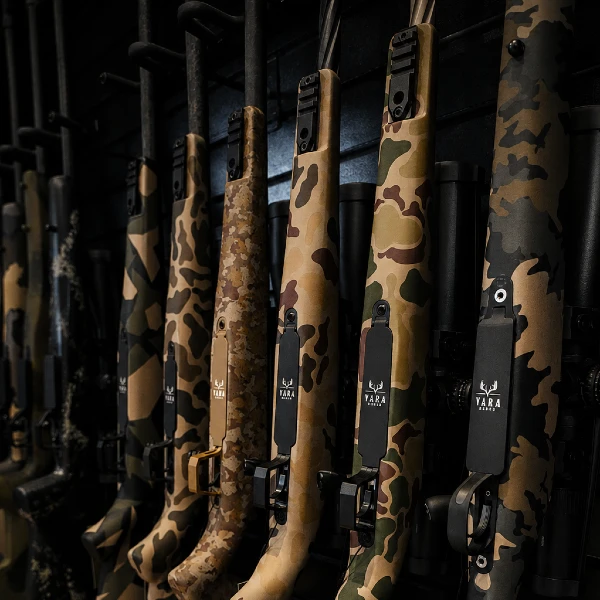
Single color or pattern. Solid colors are clean, classic, and easy to touch up down the road. Multi-color fades, camo, and battleworn finishes look incredible but take more time and skill. Price and turnaround scale with complexity.
Coverage. Barreled action, full rifle, suppressor, bottom metal, optic. Decide what gets coated and what stays as-is. Matching a can to the rifle is one of the sharpest looks you can run, and it protects the suppressor too.
Bring us the vision. Photos, a color you saw, a build you want to match. The more direction you give, the closer the result lands to what’s in your head.
The Bottom Line
Cerakote is protection first and looks second, and when it’s applied right you get both. A rifle that shrugs off corrosion and wear, and one that turns heads when you pull it out of the case.
Visit the pro shop. Bring your rifle and your vision, and we’ll spec a finish that protects the build and looks the part. Field-tested, built with intent.